Buying a used car from Japan involves more than choosing a model and comparing prices. Before making a purchase, you need to check the vehicle's condition, understand the export price, calculate shipping and import costs, and confirm that the car meets your country's import requirements.
For international buyers, understanding these steps beforehand can help avoid unexpected expenses, documentation problems and delays.
This guide explains how to buy a used car from Japan, what to check before paying, how shipping works, and what to prepare before the vehicle arrives at your destination.
Why Do Buyers Consider Used Cars from Japan?
Japan offers a wide selection of used passenger cars, SUVs, vans and commercial vehicles. Depending on the available stock, buyers can compare different manufacturers, model years, engine options, mileage and equipment before deciding which vehicle suits their needs.
However, a vehicle's suitability depends on more than its make or model. Its condition, maintenance history, parts availability, fuel economy, import eligibility and total cost should all be considered before purchasing.
When comparing vehicles, focus on the following:
- Vehicle condition: Review the available inspection records, photographs and any disclosed damage or repair history.
- Mileage and age: Consider how much the vehicle has been driven and whether its age meets your country's import rules.
- Running costs: Compare fuel consumption, maintenance requirements and the availability of replacement parts.
- Purchase and import costs: Look beyond the vehicle price to account for freight, insurance, customs duties, taxes and local charges.
- Intended use: Choose a vehicle that suits your daily travel, family needs or business requirements.
A lower advertised price does not necessarily mean a lower final cost. Compare vehicles using the total estimated cost of getting them legally cleared and ready for use.
Step 1: Decide Which Used Car You Need
Before browsing Japanese used car listings, decide what you need the vehicle to do. This will help you narrow your choices and avoid spending time comparing unsuitable models.
For example, a compact car may suit urban driving, while an SUV may be more appropriate for buyers who need additional cabin or cargo space. Businesses looking to transport passengers or goods may need a van or commercial truck instead.
Next, establish a realistic budget. Include the purchase price and an allowance for shipping, import charges, registration, inspection and any repairs that may be required after delivery.
It is also worth checking whether your destination country has restrictions on vehicle age, steering position, emissions, safety standards or engine capacity. Confirm these requirements before selecting a specific vehicle.
Step 2: Search for a Suitable Used Car from Japan
Once you know your requirements, start comparing available vehicles.
A vehicle listing should provide enough information to help you decide whether it is worth considering. Review the make, model, model year, mileage, engine capacity, fuel type, transmission, drivetrain and exterior colour where available.
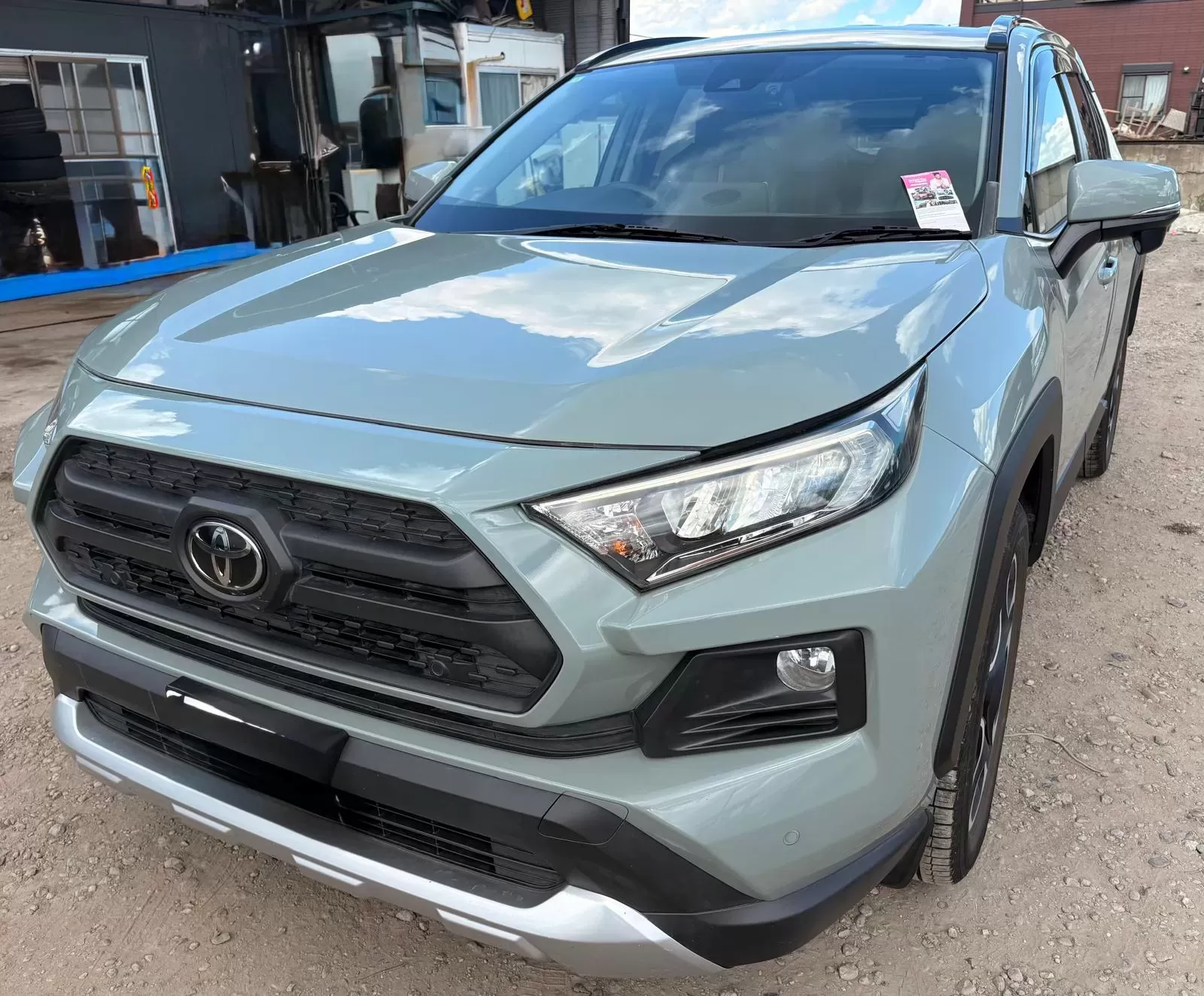
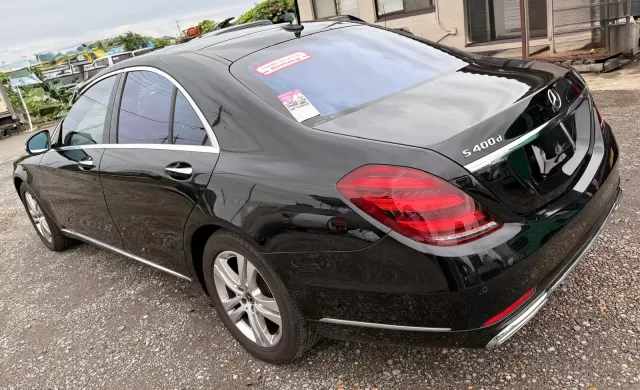
Photographs are also important. Examine the vehicle from different angles and look for visible differences in paintwork, body panels, lights, wheels and interior condition.
Before proceeding, check the following:
- Does the vehicle match your preferred model and budget?
- Are the specifications consistent across the listing?
- Is the mileage clearly stated?
- Are photographs available for the exterior and interior?
- Is the asking price current, and is the vehicle still available?
- Can the seller provide additional information if something is unclear?
Keep the vehicle's stock or reference number when requesting more details. This helps ensure that the quotation and any supporting documents refer to the correct vehicle.
You can browse the available inventory at GreatCars Japan to compare vehicles and shortlist options that match your requirements. If you need help understanding the next steps, review the GreatCars Japan buying process before requesting a quotation.
Step 3: Check the Vehicle's Condition and History
Checking the vehicle's condition is one of the most important parts of buying a used car from Japan. Photographs and specifications are useful, but they may not reveal every mechanical issue or previous repair.
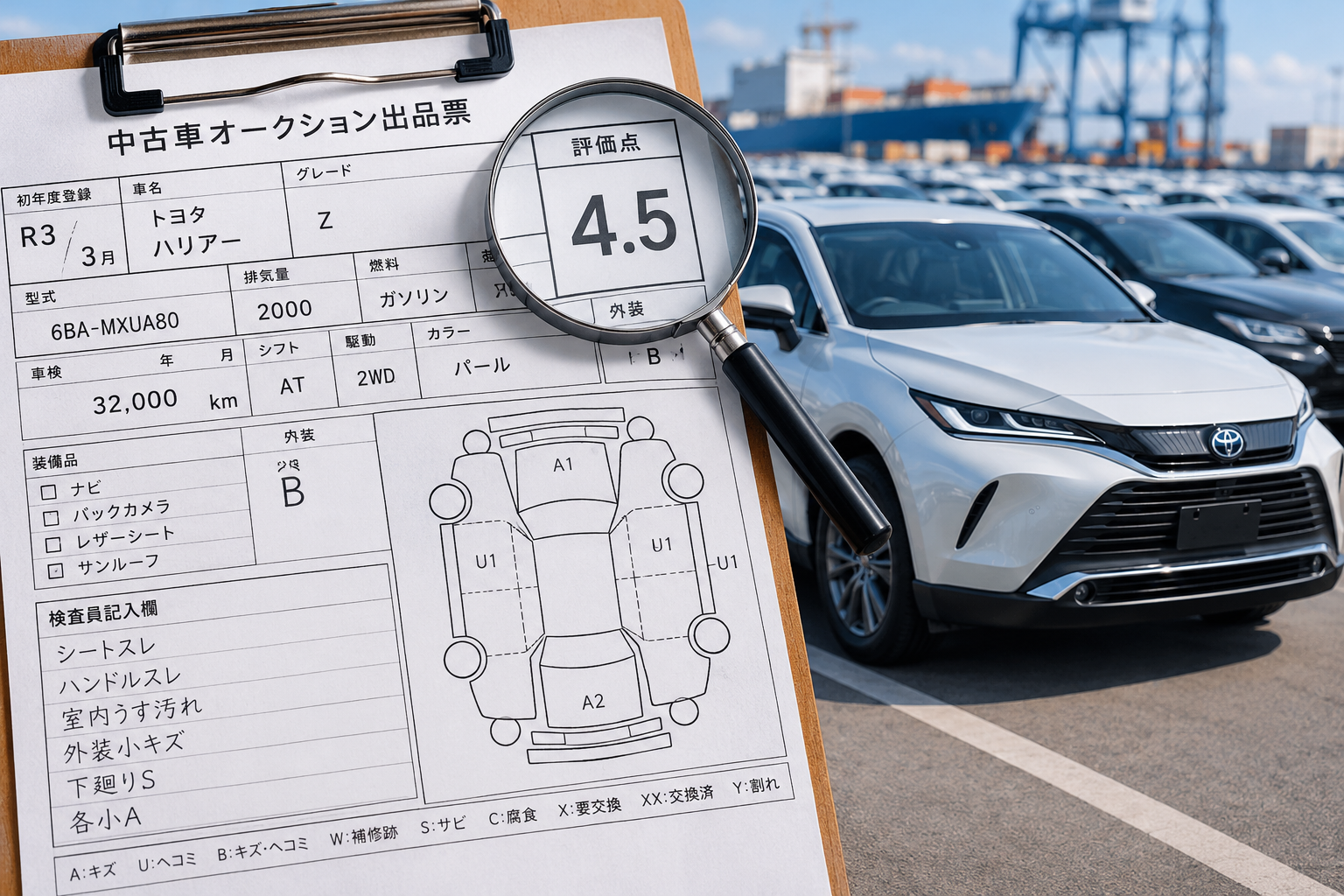
Start by reviewing all available photographs, inspection reports and vehicle history information. If the car was sold through a Japanese vehicle auction and an auction sheet is available, ask for a copy and make sure you understand the recorded grade, damage markings and inspector's comments.
An auction grade should not be treated as a complete guarantee of a vehicle's condition. The grading system and notes need to be interpreted alongside the actual inspection information.
Pay particular attention to:
Mileage records: Check the recorded mileage and look for any available supporting documentation. Do not assume that a mileage figure alone proves the vehicle's complete history.
Accident and repair information: Review disclosed damage, repair records and structural inspection notes where available. Ask questions about unclear markings or unexplained differences between photographs and reports.
Exterior condition: Look for dents, scratches, corrosion, paint differences and damage around the bumpers, doors, windows and wheel arches.
Interior condition: Examine the seats, dashboard, steering wheel, controls and other visible components for signs of wear or damage.
Mechanical condition: Ask what inspection information is available for the engine, transmission, brakes, suspension and other important systems. Photographs alone cannot confirm that these components are mechanically sound.
Additional equipment: Confirm the presence and working condition of features that matter to you, such as cameras, navigation, climate control or driver-assistance systems.
If a detail is important to your decision, request clarification before making payment. It is better to resolve an unanswered question before purchasing than to discover a misunderstanding after the vehicle has shipped.
Step 4: Calculate the Total Cost of Importing a Used Car
The advertised vehicle price is only one part of the overall cost. To understand what you may ultimately pay, request a vehicle quotation that clearly identifies the included charges and the costs that remain payable separately.
Depending on the transaction and destination, your total cost may include:
| Cost component | What to check |
|---|---|
| Vehicle price | The agreed price of the selected vehicle |
| Export and handling charges | Charges for export preparation and related services, if applicable |
| Shipping | Freight to the agreed destination port |
| Marine insurance | Whether insurance is included and what coverage applies |
| Customs duties and taxes | Charges determined by the destination country's rules |
| Port and clearance fees | Local handling, storage and customs clearance charges |
| Inspection and compliance | Any required pre-shipment or destination inspection |
| Registration and delivery | Local registration, roadworthiness requirements and transport from the port |
Not every transaction includes the same services or charges. Some costs may be included in the exporter's quotation, while others must be paid to shipping providers, customs authorities, port operators or local service providers.
Illustrative import-cost example
Suppose a vehicle is listed at US$6,000, and the agreed shipping and insurance charges total US$1,200.
The illustrative vehicle-plus-shipping amount would be:
- Vehicle price: US$6,000
- Shipping and insurance: US$1,200
- Subtotal: US$7,200
This is not a live GreatCars Japan quotation or a complete landed-cost calculation. Customs duties, taxes, port charges, clearance, registration and other applicable expenses have not been included.
The actual amount payable depends on the vehicle, shipping arrangement and destination country. Ask for a written quotation and confirm which charges are included before committing to the purchase.
Step 5: Understand FOB and CIF Pricing
When comparing quotations from Japanese used car exporters, you may encounter the terms FOB and CIF. Understanding the difference can help you compare offers more accurately.
What does FOB mean?
FOB stands for Free On Board. Under the applicable Incoterms rules, the seller's delivery obligations and the transfer of risk are linked to placing the goods on board the vessel at the named port of shipment.
The quotation should identify the named port and applicable Incoterms version. Do not assume that an FOB price includes ocean freight to your destination.
What does CIF mean?
CIF stands for Cost, Insurance and Freight. Under the applicable CIF rules, the seller arranges and pays the cost of carriage and the required level of insurance to the named destination port.
CIF does not automatically mean that every expense at the destination is included. Import duties, taxes, customs clearance, port charges and local delivery may remain the buyer's responsibility.
Which price should you compare?
| Question | FOB quotation | CIF quotation |
|---|---|---|
| Vehicle price | Included as agreed | Included as agreed |
| Ocean freight | Generally arranged by the buyer under FOB | Arranged and paid by the seller under CIF |
| Marine insurance | Depends on the buyer's arrangements | Seller arranges the insurance required under CIF |
| Import duties and taxes | Usually additional | Usually additional |
| Destination clearance and local delivery | Confirm separately | Confirm separately |
The precise contractual obligations depend on the agreed trade term and named ports. Ask the exporter to explain any charges that are not clear in the quotation.
Do not compare two offers based only on their headline prices. Compare the included services, insurance terms and expected additional expenses.
Step 6: Confirm Your Country's Import Requirements
Before paying for a vehicle, confirm that it can legally be imported into your destination country.
Import rules vary between countries and can change. Requirements may depend on the vehicle's age, registration date, steering position, engine capacity, emissions, safety standards and intended use.
Check the following with the relevant customs authority or transport regulator:
- Whether the vehicle is eligible for import.
- Whether age limits or other vehicle restrictions apply.
- Which inspection certificates or approvals are required.
- What documents are needed for customs clearance.
- How customs value, import duties and taxes are calculated.
- Whether additional registration or roadworthiness checks are required.
You may also need to arrange a licensed clearing agent or customs broker, depending on the local process.
Do not rely solely on a seller's general information when making a decision about eligibility or taxes. Confirm the current requirements with official authorities or a qualified local customs professional before purchasing.
Step 7: Confirm the Quotation and Payment Terms
After choosing a vehicle and checking its details, review the formal quotation or pro forma invoice carefully.
The document should identify the vehicle and the agreed transaction terms. Compare the stock number, vehicle details, price, currency, shipping arrangements and any additional charges against the information you received earlier.
Before making payment:
- Confirm that the vehicle is still available.
- Verify the seller's legal business details and contact information independently.
- Read the payment terms, deadlines and any cancellation or refund conditions.
- Confirm which charges are included and which must be paid separately.
- Verify bank details directly with the seller using a trusted contact method, especially if payment instructions change.
- Keep copies of the invoice, payment records and correspondence.
Avoid sending money to an account that cannot be independently verified. Do not rely on an email or message alone to approve a last-minute change in bank details.
Once payment is made, retain the relevant records so you can refer to them during export, shipping and customs clearance.
Step 8: Arrange Shipping from Japan
After the purchase and export arrangements are confirmed, the vehicle can be prepared for shipment according to the agreed terms.
Two common shipping methods for vehicles are Roll-on/Roll-off (RoRo) and container shipping.
RoRo shipping: Vehicles are driven or moved onto a specialised vessel and secured for the voyage. Availability, permitted vehicle types and handling arrangements depend on the shipping service.
Container shipping: A vehicle is loaded into a shipping container. Depending on the service, container shipping may suit particular handling requirements or shipments involving additional permitted cargo.
Neither method is automatically best for every buyer. Compare the available services, total cost, schedule, insurance arrangements and destination-port facilities before deciding.
Ask the exporter or shipping provider to confirm the expected vessel schedule, destination port, shipping documents and how you will receive shipment updates.
Shipping dates and transit times can change because of vessel schedules, port operations, weather and other circumstances. Treat estimates as estimates rather than guaranteed delivery dates.
Step 9: Prepare the Documents and Complete Customs Clearance
Documentation is an important part of importing a used vehicle. Missing or inconsistent information can delay clearance, so confirm the requirements well before the vehicle arrives.
Depending on the shipment and destination, relevant documents may include:
- Commercial invoice or pro forma invoice.
- Bill of lading.
- Export or deregistration documentation issued in Japan, where applicable.
- Vehicle identification and specification details.
- Inspection certificates or permits required by the destination country.
- Customs declarations and evidence of duty or tax payment.
- Other documents required by the local authorities.
The exact list depends on the destination country's rules and the circumstances of the transaction. Japan's export requirements and the destination country's import requirements are separate processes.
For Japan-side export procedures, consult Japan Customs' vehicle export guidance. For destination-side requirements, check the official customs and vehicle registration authorities in the country where the car will be imported.
Before shipment, confirm who will provide each document, when it will be available and how it should be submitted to the clearing agent.
When the vehicle arrives, follow the local customs process, pay the applicable charges and complete any required inspection, compliance and registration procedures before using the vehicle on public roads.
Common Mistakes to Avoid When Buying a Used Car from Japan
Choosing a vehicle before checking import eligibility: A car that looks suitable may not meet your country's age, steering or compliance rules. Check these requirements first.
Comparing only the advertised price: Shipping, insurance, duties, taxes and local charges can significantly affect the final amount payable.
Ignoring inspection information: A listing photograph cannot replace an inspection report or a careful review of the available condition records.
Assuming all exporters offer the same services: Compare the written terms, included costs, inspection information and shipping arrangements.
Misunderstanding FOB and CIF: Confirm the named ports, applicable terms and expenses that remain your responsibility.
Leaving documentation until the vehicle arrives: Find out what paperwork is required and who will arrange it before shipment.
Paying without verifying the transaction: Confirm the seller, invoice and payment instructions independently, and keep all records.
A careful review of these points can help you make a more informed buying decision and reduce avoidable problems during the import process.
Conclusion
Buying a used car from Japan becomes easier to plan when you approach it in stages: confirm import eligibility, select a suitable vehicle, review its condition, compare the full costs, verify the transaction and prepare for shipping and customs clearance.
Taking time to check the details before payment can help you avoid unexpected expenses and make a more informed decision.
If you are comparing vehicles, start by reviewing the available inventory at GreatCars Japan. Shortlist the models that fit your requirements, check their details carefully and confirm the applicable purchase and export terms before proceeding.
Frequently Asked Questions
How do I buy a used car from Japan?
Start by checking your country's import rules, choosing a suitable vehicle, reviewing its specifications and condition, and obtaining a quotation that explains the costs. Once the transaction is verified, arrange payment, shipping, customs clearance and local registration according to the applicable requirements.
How much does it cost to import a used car from Japan?
The total depends on the vehicle price, shipping, insurance, import duties, taxes, port fees, clearance and local registration. Request a destination-specific quotation and verify the applicable charges with your local authorities before purchasing.
What documents are needed to import a used car from Japan?
Requirements vary by destination. Common documents can include an invoice, bill of lading, export documentation, vehicle details, customs declarations and any required inspection certificates or permits. Confirm the final list with the destination customs authority or a qualified clearing agent.
What is the difference between FOB and CIF?
FOB generally places the main carriage arrangement with the buyer, while CIF requires the seller to arrange and pay for carriage and the specified insurance to the named destination port. Neither term automatically includes all destination duties, taxes and local delivery costs.
How can I check a used car's condition before buying?
Review the listing photographs, specifications, available inspection reports, auction sheet if applicable, mileage records and disclosed repair history. Ask the seller to clarify missing or inconsistent details and arrange additional inspection where appropriate.
How long does shipping a car from Japan take?
The time depends on the destination, vessel schedule, shipping method, port handling and customs clearance. Ask for a current estimate for your destination, and allow additional time for documentation and local procedures.
Can I import any used car from Japan?
No. Eligibility depends on the destination country's laws and the specific vehicle. Age restrictions, steering position, emissions, safety standards and other requirements may apply. Verify eligibility before committing to a purchase.