The price shown on a Japanese used car listing is only the starting point when planning an import. The final amount depends on the vehicle you choose, the shipping arrangement, your destination country and the charges involved in clearing and registering the vehicle.
A car advertised at a competitive price may cost considerably more by the time it reaches its destination. Shipping, marine insurance, customs duties, taxes, port fees and local handling can all affect the total budget.
So, how much does it actually cost to import a used car from Japan?
There is no single price that applies to every buyer. The most reliable approach is to break the cost into separate components and calculate them for your chosen vehicle and destination.
This guide explains the main expenses, the difference between export prices and total landed cost, and how to estimate your budget before buying.
What Determines the Cost of Importing a Used Car from Japan?
Several factors influence the total cost of importing a vehicle.
- Vehicle make and model: Different models have different purchase prices, dimensions and shipping requirements.
- Vehicle age and condition: Model year, mileage, condition and available equipment can affect the price.
- Destination country: Import duties, taxes, inspection requirements and registration fees vary by country.
- Shipping method: RoRo and container shipping have different costs and arrangements.
- Destination port: Freight rates and port charges depend on the route and receiving port.
- Quotation terms: An FOB quotation and a CIF quotation do not cover the same expenses.
- Local clearance and delivery: Clearing agents, storage, inspections and transport after arrival may add to the total.
Because these factors vary, it is important to compare the complete cost of importing a specific vehicle rather than relying on a general estimate.
1. Vehicle Purchase Price
The vehicle purchase price is usually the first figure buyers consider.
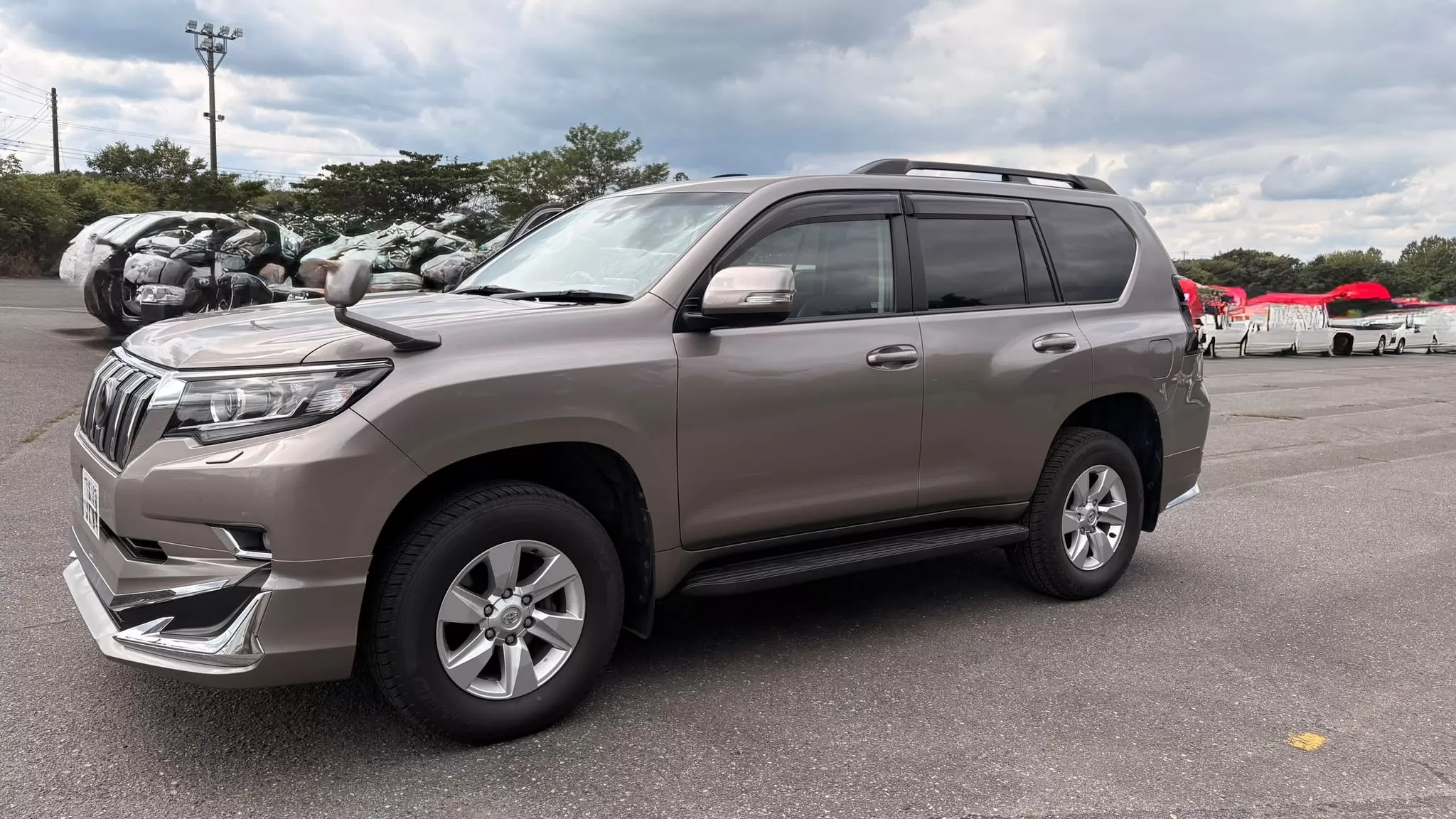
Japanese used vehicle listings may include passenger cars, SUVs, vans, pickups and commercial vehicles at different price points. The price depends on the model, year, mileage, condition, specifications and availability.
Before selecting a vehicle, compare listings that are similar in terms of age, mileage and condition. A lower-priced vehicle is not necessarily the better option if its condition, maintenance requirements or suitability for your destination are uncertain.
You should also confirm whether the displayed price is the vehicle price only or includes any export-related charges.
Start by browsing the available inventory at GreatCars Japan to compare vehicles and shortlist options that fit your requirements.
2. Japan-Side Export and Handling Charges
A vehicle purchased for export may involve charges beyond its purchase price.
Depending on the transaction, these may include export documentation, vehicle handling, inland transportation to the port, inspection arrangements and other agreed services.
Not every exporter includes the same items in its quotation. Some charges may be bundled together, while others may appear separately.
Before accepting a quotation, ask:
- What Japan-side services are included?
- Are export documentation charges included?
- Is transportation to the departure port covered?
- Is any inspection included or charged separately?
- Are there additional handling or service fees?
Requesting an itemised quotation makes it easier to understand what you are paying for and reduces the risk of overlooking additional expenses.
3. International Shipping Costs
Shipping is another major component of the import budget. The amount depends on the destination, departure and arrival ports, vehicle dimensions, shipping method and available sailing arrangements.
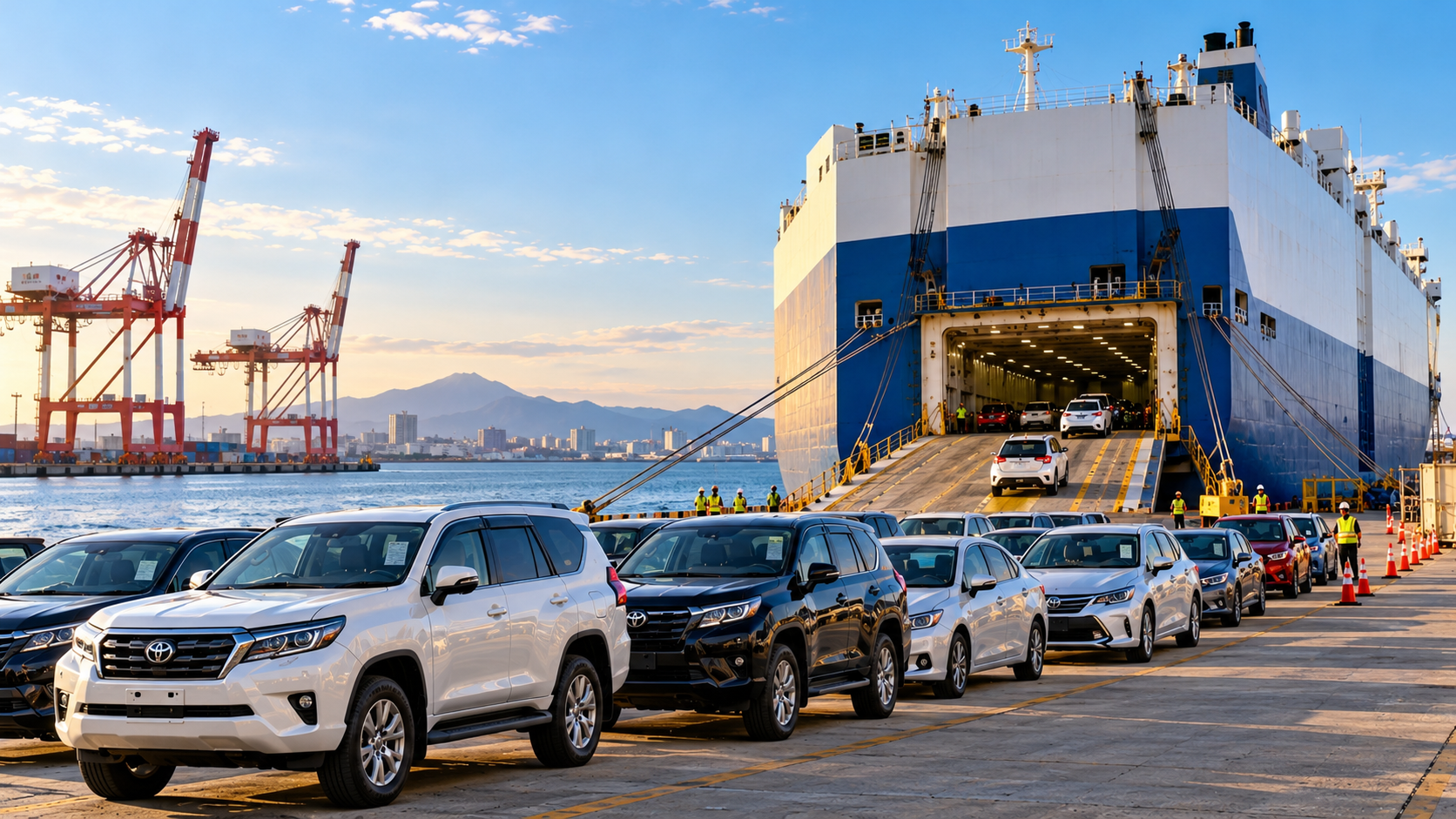
Two common methods for shipping vehicles internationally are Roll-on/Roll-off (RoRo) and container shipping.
RoRo Shipping
RoRo vessels are designed to transport vehicles that can be driven or moved onto the ship and secured for the voyage.
The suitability and availability of RoRo shipping depend on the vehicle, route and shipping service. Buyers should confirm the available service and destination port before making a purchase.
Container Shipping
With container shipping, the vehicle is loaded into a shipping container. The final cost depends on the container arrangement, vehicle dimensions, route and service provider.
Container shipping may suit certain handling requirements or routes where a suitable RoRo service is unavailable. However, it should not automatically be assumed to be cheaper or more expensive without comparing actual quotations.
How Should You Compare Shipping Quotes?
When requesting shipping prices, provide the vehicle details and your intended destination port. Compare quotes for the same route and shipping method, and check whether documentation, handling and other services are included.
Also confirm the quotation's validity period. Freight rates and schedules can change, so an earlier estimate may not reflect the price available when you are ready to ship.
4. Marine Insurance
Marine insurance can help protect against covered risks during international transit. Whether it is included depends on the agreed shipping and quotation terms.
Before accepting the insurance arrangement, confirm:
- Whether insurance is included in the quotation.
- What risks and losses the policy covers.
- What exclusions or limitations apply.
- What the insured value is.
- How a claim must be reported and supported.
Do not assume that a quotation includes insurance simply because shipping is included. Ask for the coverage details in writing and review the applicable policy terms.
5. Customs Duties and Import Taxes
Customs duties and taxes can have a substantial effect on the final import cost. The amount payable depends on the destination country's current regulations and the specific vehicle.
Depending on local rules, the calculation may take account of factors such as:
- Vehicle value and customs valuation rules.
- Engine capacity or vehicle classification.
- Model year or vehicle age.
- Vehicle type and intended use.
- Applicable customs duties, excise duties, VAT or other taxes.
- Required inspection or compliance procedures.
These requirements are not the same in every country. A tax estimate for one destination should not be used as the basis for another country's import budget.
6. Port, Customs Clearance and Local Charges
When the vehicle reaches its destination port, additional charges may apply before it can be released.
These can include port handling, terminal fees, storage, customs clearance, clearing-agent services and required inspections.
The exact charges depend on the destination, port, service providers and local procedures. Storage charges may also arise if documents are incomplete or clearance takes longer than expected.
To plan ahead, ask your clearing agent for an estimate of the charges that may apply after arrival. Confirm which costs are payable directly to the port or local service provider and which, if any, are included in your exporter's quotation.
Before purchasing, check the official customs or transport authority guidance for your destination. If the calculation is unclear, consult a qualified local customs agent.
7. Inspection, Registration and Delivery
Importing a vehicle does not always mean it is immediately ready for road use.
Depending on the destination country, you may need to arrange an inspection, meet local compliance requirements, complete registration and pay applicable fees.
You may also need to transport the vehicle from the port to your home, business or dealership.
Include these expenses in your budget instead of treating customs clearance as the final step.
How to Calculate the Total Import Cost
A practical way to estimate your budget is to list every expense and identify whether it is already included in the quotation.
| Cost component | What to include |
|---|---|
| Vehicle price | Agreed purchase price |
| Japan-side charges | Export documentation, handling and applicable services |
| Shipping | Freight to the named destination port |
| Marine insurance | Policy cost, if applicable |
| Customs duties and taxes | Amount determined under destination-country rules |
| Port charges | Applicable handling, storage and terminal fees |
| Clearance | Customs broker or clearing-agent charges |
| Inspection and compliance | Required inspections, approvals or modifications |
| Registration | Applicable registration and road-use fees |
| Local delivery | Transportation from the port to the final location |
Your estimated total can be expressed as:
Total estimated import cost = Vehicle price + Export charges + Shipping + Insurance + Destination duties and taxes + Port and clearance charges + Inspection, registration and delivery costs
Avoid adding the same expense twice. For example, if freight and insurance are already included in a CIF quotation, do not add those amounts again when calculating the total.
Also keep a separate allowance for any repairs or maintenance that may be needed after delivery.
Example: Building an Import Budget
Suppose you are considering a used car with a purchase price of US$6,000. You receive a quotation showing US$1,200 for shipping and marine insurance combined.
Your initial calculation would be:
| Item | Illustrative amount |
|---|---|
| Vehicle purchase price | US$6,000 |
| Shipping and insurance | US$1,200 |
| Initial subtotal | US$7,200 |
| Customs duties and taxes | To be confirmed |
| Port and clearance charges | To be confirmed |
| Inspection and registration | To be confirmed |
| Local delivery and other costs | To be confirmed |
The initial subtotal is US$7,200, but it is not the complete landed cost. The remaining charges must be estimated using the rules and fees applicable to the destination country.
These figures are illustrative only. They are not a current GreatCars Japan quotation, a shipping-rate estimate or a calculation of actual import taxes.
For a realistic budget, use the actual vehicle price, a current shipping quotation and verified destination charges.
FOB vs CIF: Which Price Should You Use?
When comparing Japanese used car export quotations, you may encounter FOB and CIF pricing.
FOB (Free On Board) generally relates to delivery on board the vessel at the named port of shipment. The buyer typically arranges the main sea carriage and insurance separately under this arrangement.
CIF (Cost, Insurance and Freight) includes the cost of carriage and the insurance required under the applicable CIF rules to the named destination port.
The exact contractual obligations depend on the agreed trade term, named ports and applicable Incoterms rules. Neither FOB nor CIF automatically means that all destination taxes, customs clearance, registration and local delivery costs are included.
For a fair comparison, make sure both quotations refer to the same vehicle, destination port and comparable services.
A lower headline price is not always the lower overall cost.
How to Avoid Unexpected Import Costs
A little preparation before purchasing can help you build a more realistic budget.
Check import eligibility first
Confirm that the vehicle meets your destination country's requirements before committing to a purchase. Restrictions may apply to age, steering position, emissions, vehicle classification or other specifications.
Request an itemised quotation
Ask the exporter to distinguish between included charges and expenses that remain your responsibility.
Verify destination taxes and fees
Use official guidance or a qualified local customs professional rather than relying on an unverified online estimate.
Confirm the shipping arrangement
Check the route, destination port, shipping method, insurance and quotation validity.
Keep a record of the agreed terms
Retain the quotation, invoice, payment records and shipping documentation so you can refer to the agreed amounts and responsibilities.
Allow for changes and additional expenses
Shipping schedules, port handling and clearance timelines can change. Maintain a reasonable contingency in your budget rather than allocating every available amount to the vehicle purchase itself.
Conclusion
The cost of importing a used car from Japan depends on more than its advertised price. Shipping, insurance, customs duties, taxes, port charges, clearance and local registration all contribute to the final amount.
The best way to plan your purchase is to compare complete quotations, verify your country's import requirements and identify which expenses are included and which remain payable separately.
If you are ready to compare options, browse the available vehicles at GreatCars Japan. Once you have shortlisted a vehicle, you can request a quotation to clarify the applicable purchase and export costs before proceeding.
For an overview of the purchase process, read the GreatCars Japan buying guide before making your decision.
Frequently Asked Questions
How much does it cost to import a used car from Japan?
There is no fixed amount for every vehicle or destination. The total depends on the purchase price, export charges, shipping, insurance, destination duties and taxes, port fees, clearance, inspection, registration and delivery.
Is shipping included in the price of a Japanese used car?
Not always. Some quotations cover only the vehicle and agreed Japan-side services, while others include freight to a destination port. Check whether the price is FOB, CIF or another agreed term, and confirm the included charges in writing.
Does CIF include customs duty and taxes?
CIF generally covers the cost of carriage and the insurance required under the applicable CIF rules to the named destination port. Destination customs duties, taxes, clearance, registration and local delivery are generally additional.
How can I estimate customs duty before buying?
Check the current official customs guidance for your destination country. The calculation may depend on vehicle value, age, engine capacity, classification and other local rules. A qualified customs agent can help clarify the applicable charges.
Is RoRo cheaper than container shipping?
It depends on the route, vehicle, available service and container arrangement. Request current quotes for the same destination and compare the complete charges before deciding.
What other expenses should I budget for?
In addition to the vehicle and shipping, consider insurance, duties, taxes, port handling, customs clearance, inspections, registration and local delivery. Repairs or maintenance may also be necessary, depending on the vehicle's condition.
Can I get a quotation before choosing a vehicle?
You can contact an exporter to discuss your requirements and request pricing information. Providing a specific vehicle reference, destination port and preferred shipping arrangement can help clarify the quotation and the charges involved.